TURMOIL, TRIUMPH & TENACITY
Real Companhia Velha - Celebrates 270 Years of Perseverance

Founded in 1756, Real Companhia Velha is Portugal’s oldest wine company and has been in continuous operation ever since. While many of the great historic Port houses evolved from the British merchant community in Porto, the Royal Oporto Wine Company, as it was known abroad, was Portuguese from the very beginning - a company created by Royal Charter to hand control of the Port Trade back to the Portuguese.
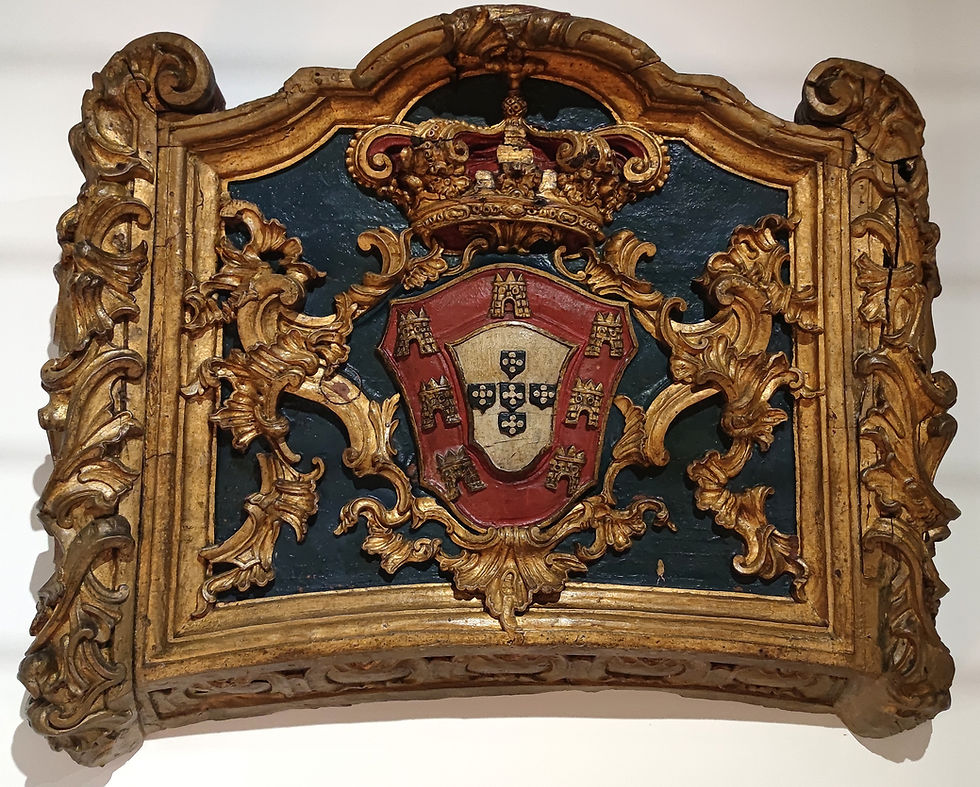
The Royal Old Company has a colourful 270-year history and as is the case with so many wine tales - Port in particular - the British played a significant role. To fully appreciate where Real Companhia Velha stands today, it’s worth shining a light on the circumstances which led to its founding - a history as formidable as it was challenging.
Britain’s enthusiasm for Portuguese wine was largely determined by frequent squabbles with the French. War, politics and penal duties periodically made drinking French wine expensive - it was even considered unpatriotic at times - so Portugal became the lucrative alternative. With the Methuen Treaty of 1703 - an agreement which also enabled the Brits access to Portuguese textile markets - import taxes on Portuguese wines to England were set at less than two-thirds of those applied to the French.

Between 1680 and 1715, exports of Port reportedly increased from around 800 to 8,000 barrels (or pipas, which for export, held ca. 440 l), reaching an extraordinary peak of some 19,000 in 1749. Inevitably, the increase in trade created a problem - everyone was after good wines. Demand was enormous; British merchants in Porto - or Factors, as they were known - had become extremely powerful, yet there simply wasn’t enough good Douro wine to satisfy the market. This deficit called for creativity - and on both sides.

Inferior wines were used to stretch quantity, wines were fortified, ginger and pimento used to fine-tune flavours, sugar to sweeten and elderberries added to deepen the colour. But this wasn't solely a Portuguese habit. On arrival in England, so-called wine brewers were also stretching foreign wines, but with their own ingredients.
This practice obviously didn’t go unnoticed and very soon Portugal’s once excellent reputation had deteriorated. British demand plummeted, Port wine was even accused of being deadly and with Portugal in serious danger of losing one of its most important exports, the market collapsed.
Historical records report exports of around 21,000 pipes in 1728 at approximately £16 per pipe compared to 10,000 in 1756, at just £2 10s per pipe. For the Douro winegrowers, this was a disaster and as was to be expected, each party blamed the other.
In September 1754, Porto's British Factors issued a circular to the Douro wine trade entitled New Instructions (Novas Instruções da Feitoria Inglesa). Their message was clear, their tone anything but gentlemanly.
Port had become so dreadful, that its reputation in England was being destroyed and the Portuguese winegrowers had better pull their finger out. The Portuguese retaliated immediately with a response as sarcastic and justified as it was tenacious. Ironically, it was the British merchants who had encouraged the producers to adulterate the wines in the first place. They were the ones demanding a particular type of Port - a style which:
...when drunk, it should be of fiery spirit, burn like gunpowder, be inky in colour, Brazilian in sweetness and boast a hint of Indian spice.
In other words, the British were getting the Super-Port they’d ordered but were now complaining about the result. The dispute didn’t end there: in 1755, the Portuguese brokers took their complaints to Lisbon, where they found a particularly interested listener: Sebastião José de Carvalho e Melo, the future Marquês de Pombal - who was soon to become the most powerful figure in Portugal.

RECLAIMING CONTROL
Pombal knew Britain well. He’d served as Portuguese ambassador in London and already mistrusted the level of influence the British merchants had acquired over the Portuguese wine trade. This was a crisis which presented him with an opportunity. On 10 September 1756 and by Royal Decree, the Companhia Geral da Agricultura das Vinhas do Alto Douro (CGAVAD) - today's Real Companhia Velha - was founded, but not purely for quality control.

The master plan was to regulate the trade, maintain the quality and reputation of Port, establish prices, restrict the mixing of Douro wine with wine from elsewhere and determine exactly which areas were entitled to produce the best wine (Vinho de feitoria) for export. It even prohibited the planting of elderberries within the demarcated area - reducing both temptation and the number of fruit trees. Porto was to become the protected gateway for the export of Douro wine, which directly affected neighbouring wine regions such as Minho, Beira and Trás-os-Montes. Minho, for example, had previously enjoyed a flourishing export trade through Viana do Castelo, where British merchants had also been established since the seventeenth century.

Then came one of the most important developments in the history of wine:
the physical demarcation of the Douro Valley. Between 1757 and 1758, 201 massive granite markers (marcos pombalinos) were erected to identify the approved vineyards, with another 134 going up in 1761.

Vineyard owners were expected to pay for these themselves and, unsurprisingly, Pombal’s own private estate, some 300 miles away in Oeiras, also qualified for classification. A vineyard register was created, vineyards and their wines categorised and new regulations and quality and price controls introduced.
This was the first time quality had ever been physically connected to geographical origin and in such a regulated manner. The demarcation of the Douro Valley is therefore widely regarded as the world’s first official Designation of Origin - or Denominação de Origem.

THE AGE OF DISCONTENT
The CGAVAD enjoyed considerable commercial privileges - from the monopoly over wine sales to Brazil and brandy production (aguardente vínica) for fortification, through to the control of local wine consumption.
The trade was hit at all levels and on both sides: the number of Portuguese merchants sank and the taverners (understandably) ran riot, resulting, in 1757, in the Innkeepers’ Revolt. Pombal was furious and arrested, imprisoned and even sentenced many of those involved to death.
As if riots weren't enough excitement for a young company established to restore honesty and order to the wine trade, their own management fell under scrutiny. By 1760, the first provedor - Luís Beleza de Andrade - was censured by the Crown for putting his private profits ahead of the interests of the company.
So, within its first five years of existence, the Companhia Geral da Agricultura das Vinhas do Alto Douro had truly rocked the rabelos - provoked an uprising, damaged the livelihoods of many Portuguese merchants, divided the Douro with its own bedrock and had a president investigated for fraud.

Perhaps the greatest irony of all, though, was that the British Factors stayed put. They now had a far better product to sell and by the end of the eighteenth century, the Port trade was flourishing again. In 1799, some 31,000 pipes were exported to England. Port accounted for an extraordinary 50% of all Portuguese exports and prosperity had returned.

PATIENCE IS A VINTAGE PORT
Until now, Port was generally shipped to Britain by the barrel and bottled on arrival - in fact, the import of bottled wine into Britain was actually prohibited until 1867 (with the exception of some French wines). Cask wine was expensive for both merchant and customer, requiring adequate space for storage. With the introduction of the cylindrical glass bottle - ideal for stockpiling and transport compared to its ornamental but bulbous predecessors - ageing costs could be passed from producer or merchant to the customer. Drinking habits were also shifting but the wealthy customer now only needed a small cellar ... and PATIENCE.

It became increasingly clear that Port matured differently depending on the vessel - pipe versus glass - and that particularly good wines from outstanding harvests could improve with age. The custom of declaring the finest vintages though, was not adopted until the mid-19th century. The CGAVAD held several excellent vintages of their own, a collection drastically reduced during both French invasions. The troops were a thirsty lot and their rations included wine - unfortunately for the company, the good stuff.

As if that wasn’t bad enough, the Portuguese Civil War in 1833 brought more misfortune: the CGAVAD wine warehouses in Vila Nova de Gaia were set alight causing a massive loss of stock. Since 1821, the company’s privileges had been slowly dismantled and in 1834, King Pedro IV finally removed the lot. The tables had turned and after almost a century of power, their position shifted from controlling the trade to competing in it - now under the name - Companhia dos Vinhos do Porto.

The subsequent thirty-year cycle was one of survival and restructuring, but also periods of positively great success. In 1865 and just as the markets had finally been opened to all, disaster struck again. The culprit this time was American, had six legs and affected everyone in the trade. An American immigrant better known as the dreaded vine louse - or phylloxera - from which it would take the region the best part of two decades to recover. Despite the setback, the 1870s saw an increase in sales - particularly to Brazil, Russia and Scandinavia. In 1878, the Companhia dos Vinhos do Porto became a public limited company, readopted its original name - Companhia Geral da Agricultura das Vinhas do Alto Douro - to remain a significant force in the Portuguese wine trade.
COMING FULL CIRCLE
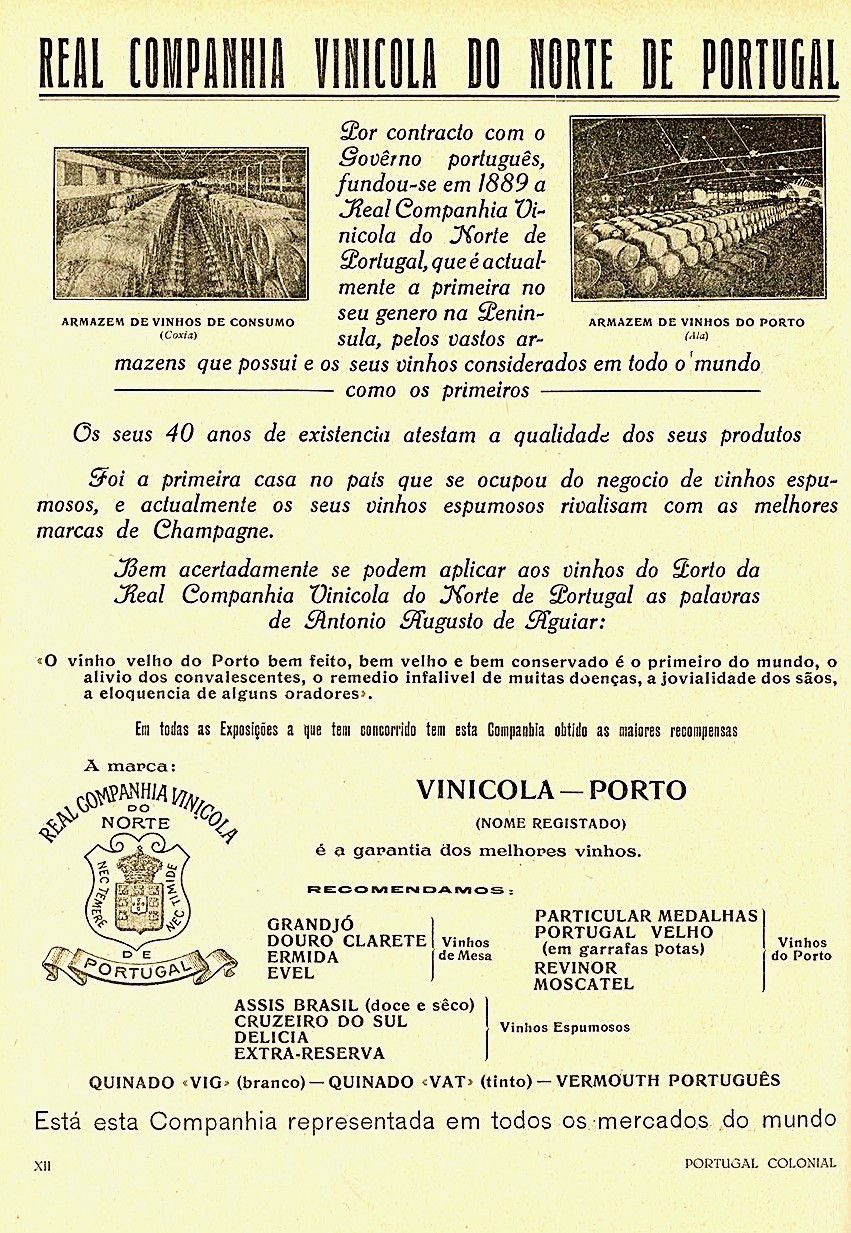
In 1889, a second royally approved company, set up as both mediator and trader in its own right, entered the stage: Real Companhia Vinícola do Norte de Portugal.
Two Royal Companies operating in Porto caused great confusion and as a result, the CGAVAD was nicknamed Real Companhia Velha - and that name stuck.
Seventy-four years on, Manuel da Silva Reis, who had taken control of Real Companhia Velha in 1960, also acquired the new Companhia and in doing so successfully united old with new.

To say Real Companhia Velha is an established name in the Portuguese wine sector would be somewhat of an understatement. Boasting five outstanding wine estates (Quinta das Carvalhas, Quinta do Síbio, Quinta dos Aciprestes, Quinta do Casal da Granja, Quinta de Cidrô), having launched numerous successful brands - each of which stands firmly on its own merits - Real Companhia Velha continues to secure its hard-fought position - through passion, extensive knowledge and consistently high standards of quality. They also has very large cellars - and know exactly when to open a bottle.
TALKING CELLARS…

The remarkable history - described in part above - can still be explored today. Just a stone’s throw from the Douro River in Vila Nova da Gaia, the Museu da 1.ª Demarcação opened its doors to the public in 2018. The fascinating collection of centuries-old documents, imagery, bottles and artefacts offers a tangible connection to the Company’s past. The time capsule preserving more than two and a half centuries of history, includes a wine shop and tasting area for further adventures.

During a visit to Portugal in February, I was kindly shown around the Museum by Wine Tourism Director José Sá, before heading across to the cellars in Rua Azevedo Magalhães. That`s the place where the 270-year heritage becomes extremely drinkable.
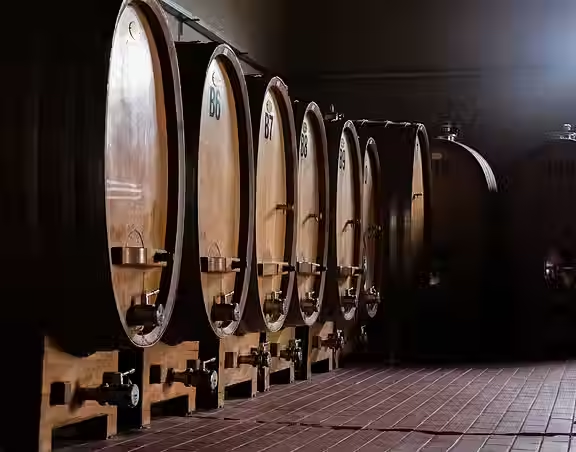
The combination of both visits successfully brought the tale of Real Companhia Velha to life. Within damp, cobwebbed cellar walls there is an extraordinary collection of old vintages. A liquid archive stretching back through generations of company history. It goes without saying, that a visit to the cellars presents another opportunity - led by a highly qualified team - in which to check out the wines.

Following a day immersed in 270 years of remarkable history and a convincing tasting, there was only one sensible thing left to do. Grab a bite to eat!
Going back the way I’d come, I arrived at Real Companhia Velha’s restaurant - Enoteca 17.56 - with a very healthy appetite. The Enoteca 17.56 (and museum) building, although rather obscure from the outside, is easily recognised thanks to the brick-red façade and soaring chimney.

Contemporary Portuguese cuisine and, unsurprisingly, an extensive selection of the company’s wines and Port wines await you. With an integrated Fromagerie supporting pairings of cheese and wine, the first-floor restaurant is open for lunch, dinner and afternoon snacks. Even smokers feel comfortable here - whether outside on the extensive terrace or inside in the “airtight” Cigar Club lounge and reminiscent of a gentlemen’s library. Enoteca 17.56 is a high-end, tastefully furnished location without feeling in the slightest bit snobbish.

For seafood fans, Enoteca 17.56 boasts its own Sushi-Bar behind which the team (with their consent) seemed as content at work, as I was happy to be there.

The staff overall were extremely welcoming and attentive and the menu left me spoilt for choice. I chose what I considered to be small dishes but ended up over-enthusiastically ordering far too much, so instead of catching a lazy cab, I walked home.


At the restaurant, I apparently - yet quite unknowingly - took a seat at the window, where normally one of their regulars dines. On his arrival, the charming gentleman approached me politely, yet promptly forgave me for my ignorance.


Dear José, many thanks for your time and your kind support. Where are we off to next?!
For more details about all winery locations and to plan your own visit, please visit Real Companhia Velha’s main homepage here:
Individual location contacts details here:
You may also like to pop over to my editorial covering a previous visit to Quinta das Carvalhas and one which played a major role in inspiring me to investigate Real Companhia Velha in more detail.
Only four to go & counting.. 😉